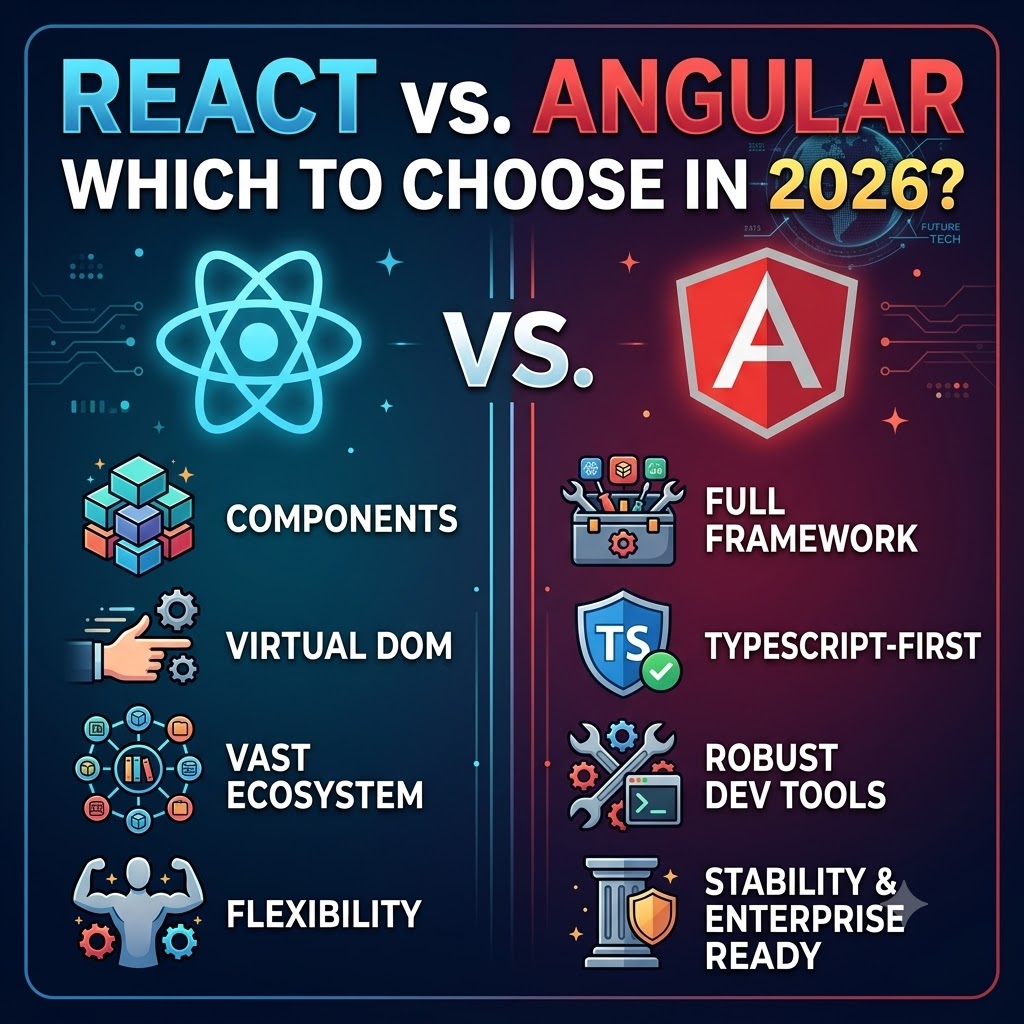
The State of Frontend Architecture
As we progress deeper into 2026, the landscape of frontend development continues to be dominated by two major players: React and Angular. While newer frameworks like Svelte and SolidJS have carved out significant niches, enterprise-scale applications still largely rely on the established ecosystems of these two giants. But which one should you choose for your next big project?
"React gives you the flexibility to build your own perfect stack, while Angular provides a strictly opinionated framework where all decisions are made for you. In 2026, the choice is less about performance and more about your team's engineering culture."
React: The Unopinionated Ecosystem
React's biggest strength remains its flexibility. With the widespread adoption of Next.js 16 and Server Components, React has evolved from a simple UI library into a full-stack meta-framework. This flexibility, however, means your team must make critical architectural decisions regarding routing, state management, and data fetching.
- Pros: Massive ecosystem, unparalleled flexibility, huge talent pool, Server Components integration.
- Cons: Prone to "spaghetti architecture" if not strictly managed, high cognitive load for tooling setup.
Angular: The Enterprise Workhorse
Angular has undergone a massive renaissance. With the removal of NgModules and the introduction of Signals for fine-grained reactivity, Angular in 2026 is faster and more developer-friendly than ever before. Its "batteries-included" approach means that routing, HTTP client, and forms are standardized across every project.
- Pros: Strict architectural guidelines, excellent TypeScript integration, powerful CLI, built-in solutions for everything.
- Cons: Steeper learning curve, heavier initial bundle sizes compared to micro-frameworks.
The Verdict
Choose React if you are building a highly interactive, consumer-facing application where time-to-market and access to a massive talent pool are critical. Choose Angular if you are building complex, data-heavy enterprise dashboards where strict architectural consistency across dozens of developers is paramount.