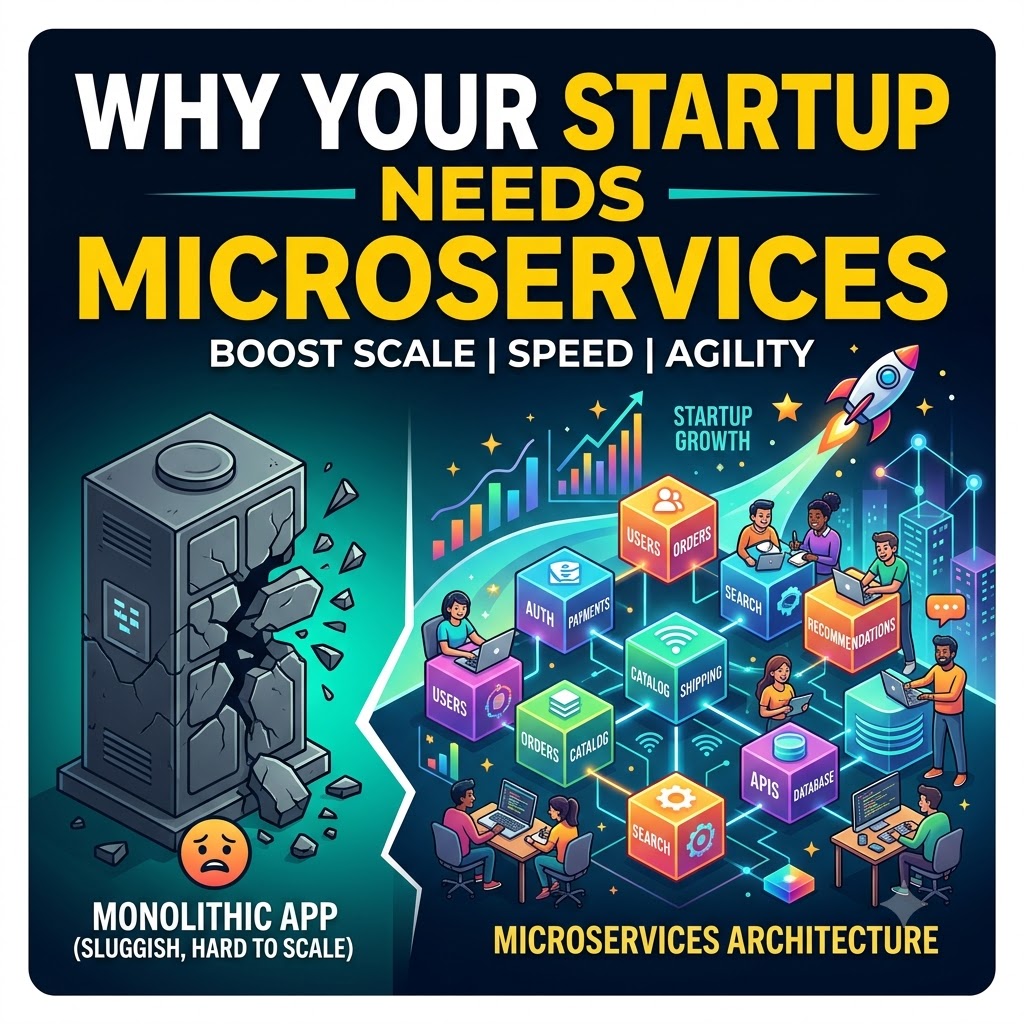
The Monolith Trap
Every successful startup begins with a monolith. It makes sense: when you're racing to find product-market fit, having all your code in one repository with a single database is the fastest way to ship. However, once you hit scale—when traffic spikes and your engineering team grows beyond 15 people—that same monolith becomes your biggest liability.
Signs You Need to Break the Monolith
Transitioning to microservices shouldn't be done prematurely. You know you're ready when:
- Deployments take hours and frequently break unrelated systems.
- Onboarding new engineers takes weeks because the codebase is too entangled.
- You cannot scale individual components independently (e.g., your reporting engine requires 10x the memory of your user auth service).
"Microservices do not reduce complexity; they shift it from the codebase to the infrastructure. Ensure you have the DevOps maturity to handle it."
The Path Forward
Transitioning to microservices isn't a weekend project. Start by identifying domain boundaries within your app. Extract the easiest, least-dependent service first (like email notifications or pdf generation). Utilize Docker, Kubernetes, and an API Gateway to manage routing. Slowly strangle the monolith until it becomes just another small service in your mesh.